Introduction
Audiovisual production has evolved far beyond traditional event staging or standalone video shoots. Modern brands increasingly need integrated production partners that combine live experiences, cinematic storytelling, AI-assisted workflows, and scalable content distribution into one connected system.
This shift is rapidly transforming the industry. According to Research and Markets, the global audiovisual production services market is expected to reach $48.57 billion by 2026, driven by demand for hybrid experiences and digital-first content strategies.
Companies like XTRND represent this new generation of audiovisual production by combining cinematic production, AI-powered workflows, and scalable content creation for modern brands. This article explains what modern audiovisual production companies actually do and how businesses can choose the right production partner for future-focused content strategies.
What Modern Audiovisual Production Companies Actually Do
A modern audiovisual production company combines technical production, creative direction, content strategy, and post-production into one coordinated workflow. These companies operate across live events, branded content production, livestreaming, social media assets, virtual experiences, and multi-platform distribution. Traditional AV providers often focused primarily on equipment rental and technical execution.
Today’s integrated production companies deliver much broader capabilities, including:
-
cinematic video production
-
live event production
-
hybrid event infrastructure
-
livestreaming systems
-
AI-assisted editing workflows
-
motion graphics and animation
-
multi-platform content adaptation
-
scalable post-production pipelines
This evolution reflects how organizations now consume and distribute content. A single event no longer serves only in-person attendees. It also generates marketing assets, social media clips, executive interviews, highlight reels, training content, and digital campaigns.
As a result, production workflows increasingly center around content scalability rather than isolated deliverables.
Why Integrated Production Matters More Than Traditional AV Services
Many businesses still associate audiovisual production with microphones, projectors, and conference staging. While technical infrastructure remains important, modern production increasingly revolves around integrated content ecosystems.
A product launch, for example, may require:
-
live audience production
-
LED wall environments
-
cinematic brand videos
-
livestreaming
-
vertical social media content
-
AI-assisted editing
-
multilingual content adaptation
-
post-event marketing assets
Managing these elements through separate vendors often creates inconsistencies, communication gaps, and duplicated costs. Integrated production workflows solve this by aligning creative strategy, technical execution, and post-production from the start. This industry shift is visible across the market. In 2026, TAIT acquired Silent House Group to combine staging infrastructure with creative production services, reflecting the growing demand for unified production capabilities.
Companies such as XTRND operate within this new generation of production models by integrating AI-assisted production pipelines with cinematic content creation and event experiences.
How AI Is Changing Audiovisual Production

Artificial intelligence is rapidly reshaping how audiovisual content gets planned, produced, edited, and distributed. While AI does not replace creative direction, it significantly improves production speed, scalability, and content adaptability.
Modern AI-assisted workflows support:
-
automated editing assistance
-
faster content localization
-
intelligent shot selection
-
AI-generated subtitles and translations
-
scalable content repurposing
-
automated formatting for different platforms
-
accelerated post-production timelines
These workflows dramatically reduce production bottlenecks. According to VidBoard, traditional video production can cost between $1,000 and $10,000 per minute, while AI-assisted workflows substantially lower production costs and turnaround times for scalable content environments. This becomes especially valuable for companies producing large amounts of branded content across multiple channels simultaneously.
For example, XTRND’s AI-focused production workflows help organizations streamline content production while maintaining cinematic quality and creative consistency across campaigns.
Modern Event Production Is Now Content Production
Live event production has evolved from temporary technical execution into a central part of long-term content strategy. Corporate conferences, product launches, summits, and hybrid experiences now function as large-scale content generation opportunities.
Modern event production often includes:
-
multi-camera cinematic capture
-
livestream broadcasting
-
social-first video production
-
branded visual environments
-
real-time content distribution
-
post-event content repurposing
This creates much greater long-term ROI from a single production investment. Hybrid events have accelerated this transformation even further. According to industry estimates, audiovisual services account for approximately 10–15% of total event budgets, with costs increasing significantly for hybrid and digitally integrated experiences.
The difference today is that brands increasingly expect those production investments to generate ongoing content assets rather than temporary live experiences alone. Integrated production companies help organizations design productions with future distribution already built into the workflow.
What Businesses Should Look For In A Modern Production Partner
Choosing the right audiovisual production partner now requires more than evaluating technical equipment lists or pricing sheets. Organizations should assess whether a provider can support long-term content strategies, scalable workflows, and modern production technologies.
Evaluate Integrated Capabilities
Businesses should assess whether production, editing, livestreaming, creative direction, and post-production operate inside one connected workflow.
Fragmented vendor structures often create:
-
inconsistent visual quality
-
duplicated communication
-
slower delivery timelines
-
disconnected creative execution
Integrated workflows improve consistency and efficiency across all production stages.
Assess AI And Technology Readiness
Production standards evolve quickly.
Companies should evaluate whether a provider actively works with:
-
AI-assisted editing systems
-
hybrid production infrastructure
-
vertical content formats
-
remote production workflows
-
scalable post-production pipelines
-
immersive visual technologies
A provider that lacks modern workflow capabilities may limit future scalability and content adaptability.
Organizations exploring advanced production systems often evaluate providers like XTRND because of their focus on AI-enhanced cinematic production and scalable digital content ecosystems.
Review Relevant Portfolio Experience
A strong production portfolio should demonstrate both technical execution and strategic understanding.
Businesses should evaluate whether previous work aligns with:
Modern production is not only about visual quality. It is also about how efficiently content performs across platforms and campaigns after production ends.
Prioritize Content Scalability
One of the biggest shifts in modern audiovisual production is the ability to generate multiple content outputs from a single production environment.
A single event or production day may now create:
Companies that design productions around scalable content ecosystems generate significantly higher long-term value from their production investments.
Common Mistakes Companies Make When Choosing AV Partners
Many organizations still evaluate production companies using outdated criteria focused mainly on equipment or day rates. This often leads to inefficient workflows and missed content opportunities.
Common mistakes include:
-
separating event production and video production vendors
-
treating video capture as an afterthought
-
focusing only on lowest-cost proposals
-
ignoring post-production scalability
-
failing to plan multi-platform distribution early
-
overlooking AI-assisted workflow capabilities
These mistakes often increase long-term production costs and reduce overall content value.
Modern audiovisual production works best when content strategy, technical infrastructure, and post-production planning are aligned from the beginning.
XTRND’s Approach To Modern Audiovisual Production
XTRND operates at the intersection of cinematic storytelling, AI-powered production workflows, and integrated content systems. Instead of treating live production, video creation, and post-production as isolated services, XTRND combines these workflows into scalable production ecosystems designed for modern brand communication.
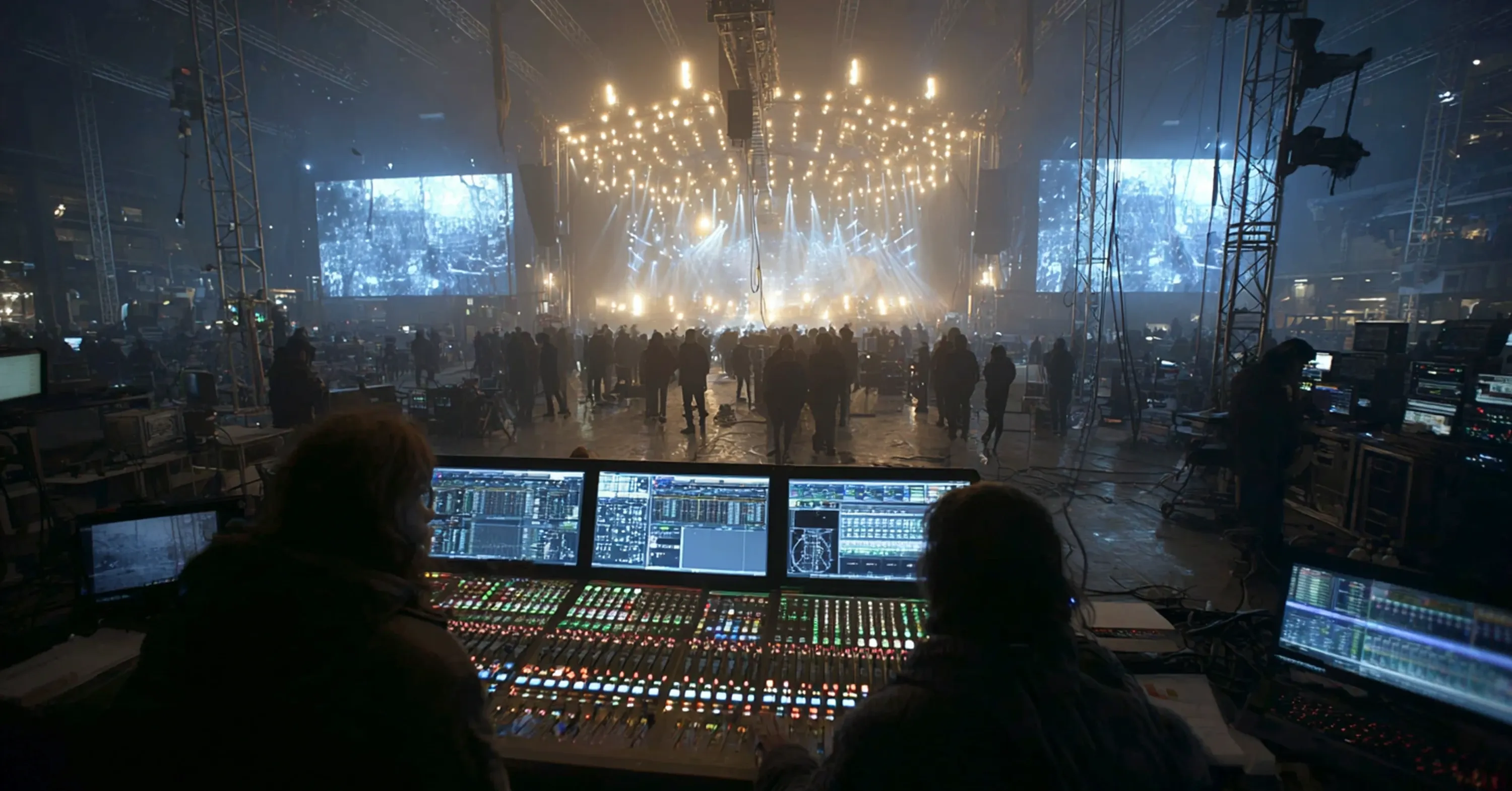
This approach allows businesses to:
-
create cinematic branded content
-
scale production output efficiently
-
streamline post-production
-
repurpose content across platforms
-
combine live experiences with digital distribution
-
accelerate content delivery timelines
XTRND’s production model reflects the broader industry transition toward integrated, technology-driven audiovisual production strategies.
Organizations exploring future-focused content workflows can also explore topics like:
Conclusion
Audiovisual production is no longer limited to technical event support or standalone video shoots. Modern brands increasingly require integrated production partners that combine cinematic storytelling, AI-assisted workflows, scalable content systems, and hybrid production capabilities into one unified process.
As content demands continue to grow across digital platforms, organizations benefit most from production partners that can transform single productions into scalable content ecosystems with long-term business value.
Companies like XTRND represent this new generation of audiovisual production by combining advanced technology, cinematic production quality, and integrated workflows designed for modern brand communication.