Videography Services: What’s Included + Hiring Checklist

Content authorBy Rim AkawiPublished onReading time12 min read
Title:
Videography Services: What’s Included + Hiring Checklist

Meta description:
Learn how videography services work so you can choose a provider that fits your project and confirm usage rights.

Ar

This article explains what videography services cover from planning through delivery and how to compare providers on scope. It also outlines the deliverables and rights you should expect. It ends with a hiring checklist and a videography services shot list template you can bring to your first planning call.

What videography services actually mean

You have been asked to get a video made, and the first quotes you pulled up talk about videography services without telling you where the work starts or stops. That gap is the problem. The phrase covers the full job, from planning a video to finishing it, which is different from hiring someone who owns a nice camera and shows up to press record.

Think of it as end-to-end production. A camera operator provides videography services by capturing footage. A videography service takes your goal and turns it into something you can publish through a planned production process. The difference matters because the parts you cannot see, the planning and the editing, are where most of the value and most of the budget sit.

The rest of this piece breaks down each phase and what you actually receive at the end. It also shows how to read past clever package names so you know what you're buying.

What is included in videography services

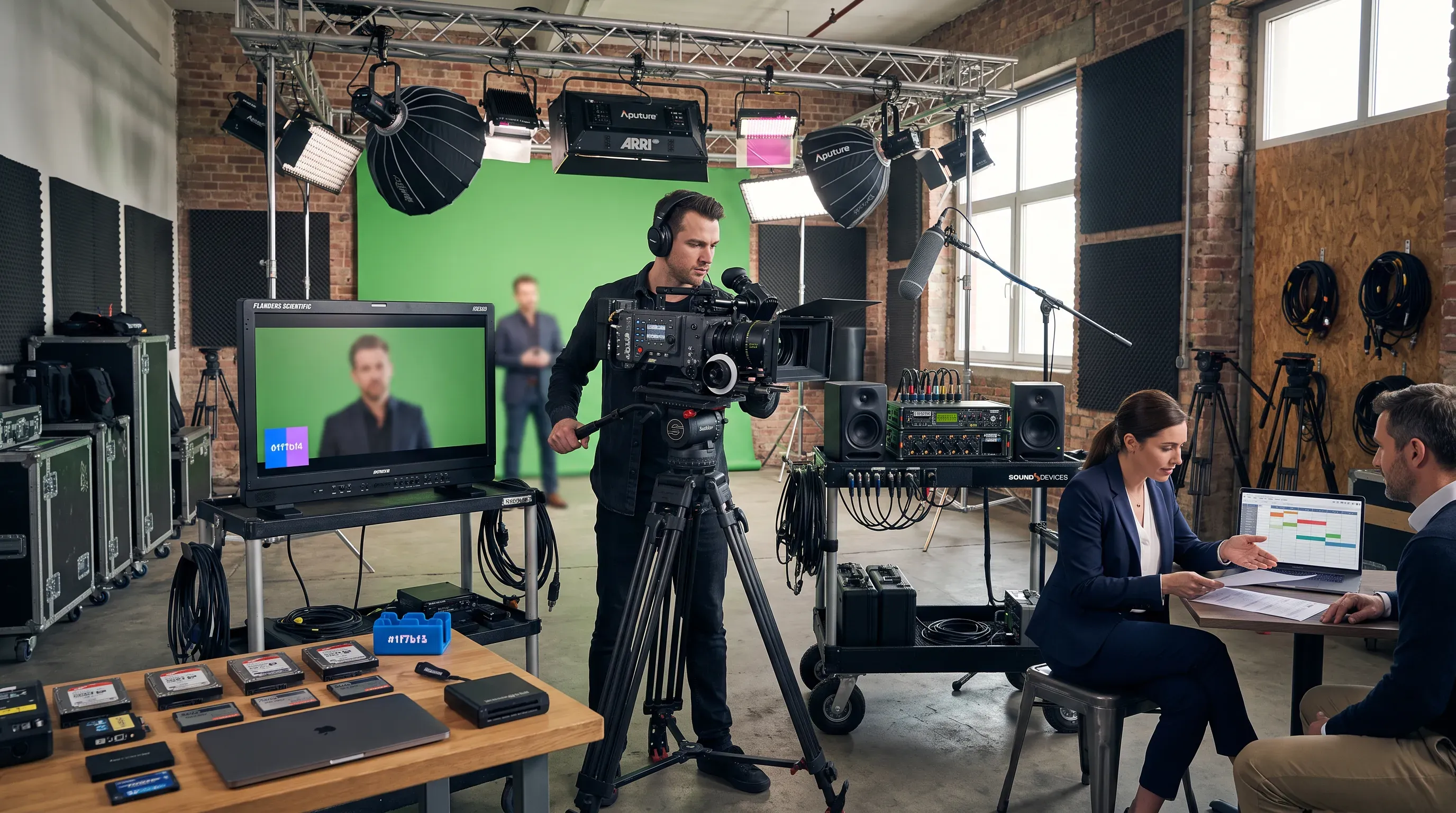
A professional videographer operates a high-end camera in a modern industrial video studio, surrounded by lighting, audio equipment, and a client.

Every video follows the same three phases, whether it's a two-minute product explainer or a multi-day brand film. Pre-production is the planning. Production is the shoot. Post-production is the edit. Universities, agencies, and in-house teams all use this framework because, as the production studio Lemonlight puts it, it "mirrors how work actually gets done."

A reputable provider includes all three. That's worth saying plainly, because a cheaper quote sometimes covers only the shoot day and quietly leaves planning and editing to you. When you compare providers later, the presence of real pre-production and post-production is one of the clearest signals of a full videography service with production support.

Pre-production planning

This is everything that happens before a single frame is shot. It starts with a discovery conversation where the provider learns your goal, your audience, and what the finished video has to accomplish. From there, the work develops the message and visual plan, then addresses the logistical requirements for the shoot.

Your input matters most here. The provider can't plan a video that lands with your audience unless you tell them who that audience is and what you need them to do after watching. Skipping this stage to save money almost always backfires. Vidico, which has managed over 2,000 video projects for brands like Spotify and Square, notes that pre-production takes 15 to 25% of a budget and that cutting it "almost always costs more in reshoots and revisions."

Expect meetings and documents at this stage. A creative brief and a production plan are the normal outputs. When you see those coming together, you know the shoot day has been de-risked before anyone picks up a camera.

Filming and shot planning

Production is the shoot day, and a well-run one looks calm because the decisions were made in advance. The crew arrives against a plan. On a small job, the crew is a single videographer who also handles audio. On a larger one, a camera operator and sound specialist handle the shoot, with lighting support, because getting clean audio is as much work as getting a clean image.

Equipment, lighting setup, and audio capture all run against the videography services shot list template, which is the document that keeps the day on track. A shot list, as StudioBinder describes it, is "a document that maps out everything that will happen" by describing each shot, and it "serves as a kind of checklist" for the crew. This is where a videography services shot list template earns its place, because it's the artifact that aligns your must-have shots with what the crew actually captures.

You don't need to run the shoot, but being present or reachable helps. If the provider is external, having one person from your side on location to answer questions and approve calls in the moment keeps the day moving. That's the role you play during filming: the point of contact who can say yes or no without a delay.

Want to build something that hits?

Ideas are cool. But action's cooler. Tell us about your project and let's create content that lands fast, loud, and strategic.

Post-production and editing

Filming ends and the video is far from done. Post-production is where the story actually takes shape, and first-time buyers underestimate it constantly. This stage turns the footage into a finished video through editing and finishing work, followed by rounds of revisions where you review a cut and request changes.

Two things you should confirm before signing are the number of revision rounds and the turnaround time, because both are part of what you're paying for. Awakened Films, a New Jersey production company, scopes most client projects for two rounds of revisions, which it calls "sufficient to incorporate input from major stakeholders, while maintaining a post-process that is efficient and cost-effective." Get that number in writing so a third or fourth round doesn't arrive as a surprise invoice.

Here's what a typical post-production stage includes:

  • Editing the raw footage into a story, with pacing and structure

  • Color grading and sound work so the video looks and sounds finished

  • Music, motion graphics, and captions layered in as needed

  • One or more revision rounds where you review and comment

Budgets reflect how heavy this stage is. Vidico's breakdown puts post-production at 25 to 35% of a project. When someone quotes you a shoot-day rate with no mention of editing, that's your cue to ask what happens to the footage afterward.

Deliverables and rights to expect

Process is one thing. What lands in your hands is what you're actually buying, and this is where you want to be specific before you sign. A finished project includes a final edited video in the delivery format you'll publish in, along with versions for web and social platforms. Ask whether master files or raw footage are part of the package, because they aren't included by default.

That last point catches people off guard. Under U.S. copyright, the person who creates a work owns it the moment it's created, which means paying for a video doesn't automatically make you the owner of the raw footage or the project files. As Jon Conti, a video producer who writes on the topic, explains it in plain terms: without a written agreement that says otherwise, "you don't own the raw footage, the project files, the underlying copyright, or even the finished video itself." What your payment buys is permission to use the finished work.

Clarify Rights Before You Sign

Music is the other trap. Any commercial video produced through commercial video services needs a synchronization license for the music in it, and the Recording Industry Association of America confirms that this holds "even if the use is less than 30 seconds." A reputable provider licenses music cleared for your intended use, so your video won't get muted or pulled down on YouTube or Instagram.

Confirm these points upfront:

  1. The deliverables you receive, such as social cuts and any master or raw files

  2. What usage rights you get, and for how long and which channels

  3. Who holds the music license and whether it covers your platforms

Get this right and your video works everywhere you need it. Get it wrong and you own a file you can't legally repurpose, which is the difference between an asset and a dead end.

How to choose videography services

Here's the worry underneath the whole search: how do you compare providers without getting misled by price or a clever package name? The answer is to weigh scope and fit ahead of the cheapest quote. Two providers can charge the same and deliver wildly different things, so the skill is knowing what to look at.

Break the decision into a few checks you can weigh separately. Match the work to your project and compare what's actually included. Then ask the questions that separate a reliable provider from a risky one.

Match the portfolio to your project

A polished general reel isn't enough. Look for work close to what you need, because a wedding specialist who shoots gorgeous ceremonies does not know how to structure a corporate explainer or a product launch. Relevance to your format and industry tells you more than raw production value.

When you watch samples, judge the storytelling and the lighting even if you're not a video person. Does the video hold your attention? Is it clear what it's trying to say? Asking a provider for examples that match your project type is normal and expected, so request them directly. A confident provider will have comparable work ready to show.

Want to build something that hits?

Ideas are cool. But action's cooler. Tell us about your project and let's create content that lands fast, loud, and strategic.

Compare scope not just price

This is the trap that costs people the most. Package names vary from one company to the next and mean nothing on their own. Tetra Films, a Vancouver production company, sells a Standard package at $9,999 with a full-day shoot and up to three locations, while another studio's "Standard" covers a half-day and one location. The label is marketing. The inclusions are the product.

So normalize every quote against a consistent list. For each provider, write down the hours of coverage and the complete scope of post-production. When you line the quotes up against the same checklist, the real differences surface, and a higher number sometimes turns out to be the better value because it includes work the cheaper option quietly left out.

Questions to ask before hiring

Bring these to a discovery call. The way a provider answers tells you as much as the answers themselves, because a reliable one has clear processes and a risky one improvises.

  • Have you produced videos like mine before, and can I see two examples?

  • What does your process look like from brief to final delivery, and how will we communicate?

  • Who actually operates the camera on shoot day?

  • What's your backup plan if equipment fails mid-shoot?

  • What's the delivery timeline and final format?

  • How many revision rounds are included, and what happens beyond that?

  • Which usage rights and music licenses do I receive?

  • Can you share references from recent clients?

These questions are the baseline a professional expects, and a provider who bristles at them is telling you something useful.

When you need a specialist instead

This guide covers the general case, but some needs point you toward a dedicated provider. If any of these describe your situation, follow the specific path that fits your project.

  • Ongoing internal and brand work, like recurring culture videos or executive messages, suits a corporate videographer who builds a consistent look over time.

  • Ad and campaign work with paid distribution behind it belongs with commercial video services, since commercial video services are built around performance and media. When the goal is a campaign that runs across paid channels, commercial video services bring the strategy that general videography services don't.

  • A project where you want one person who both shoots and cuts is a job for a videographer and editor working solo, which keeps costs down on smaller pieces.

Match the specialist to the need and you'll get sharper work than a generalist can offer on that specific job.

Use the shot list template

A shot list is a plain document that names every shot you need, with details like framing, angle, and what's happening in each one. It reads like a checklist, and its job is to make sure the crew captures everything the story requires before the day ends. The film production platform Wrapbook describes it as a tool that breaks "an imagined project into individual tasks with realistic parameters," which is what keeps a shoot aligned and on budget.

You don't have to write it like a director. As a buyer, you use a videography services shot list template to communicate your must-have shots, the moments the video cannot be missing, so nothing important gets forgotten in the rush of the day. It's the bridge between what you picture and what the provider executes, and a good videography services shot list template gives you a structure to fill in without knowing the technical language.

Fill it in before your first planning call. Even a rough version that identifies who and what needs to appear on camera gives the provider a head start and makes the discovery conversation concrete. That single document turns your rough idea into something a crew can act on.

The XTRND Approach to Videography Services

At XTRND, we see videography as more than capturing footage—it's about creating content that supports your business objectives from the first planning meeting to the final delivery. Our videography services cover the entire production process, including strategic planning, creative development, filming, post-production, and delivery of platform-ready assets. Every project begins with understanding your goals, audience, and distribution channels so we can recommend the right production approach rather than a one-size-fits-all package. Throughout the process, we focus on transparent communication, efficient workflows, and clearly defined deliverables, ensuring there are no surprises when it comes to timelines, revision rounds, licensing, or usage rights. The result is a streamlined production experience and professional video content that's built to perform across websites, social media, advertising campaigns, and other marketing channels.

Choosing with confidence

You started with a rough idea and a stack of confusing quotes. Now you know what videography services include throughout the production process and how to compare providers on substance. You also know which deliverables and rights to confirm before signing. A confident hire comes from clarity on scope.

Bring the checklist and the videography services shot list template to your next discovery call and let the answers guide you. XTRND provides commercial video services that help brands plan video production and distribution for brand films and social campaigns, with production expertise and modern workflows. If you're scoping your next project, book a consultation with XTRND to see how the right videography services fit your goals.

Want to build something that hits?

Ideas are cool. But action's cooler. Tell us about your project and let's create content that lands fast, loud, and strategic.

Book videography services as soon as your publish date and location are known. Allow enough lead time for concept approval and crew scheduling after location access is confirmed. A compressed schedule limits options and can raise costs through rush work.

Get signed appearance releases from anyone who is identifiable and isn't covered by an employment agreement or event notice. For minors, a parent or legal guardian must sign. Ask the provider who supplies the forms and where signed records will be stored.

Yes, give the provider your current brand guidelines before pre-production begins. Include approved logo files and examples of your brand voice. This reduces avoidable changes when titles, graphics, or on-screen text reach review.

Prepare employees with the interview topic and the intended audience. Ask them to wear clothing without busy patterns or visible competitor logos. They shouldn't memorize a script, since natural answers are easier to edit and sound more credible.

Yes, a deposit is standard because a provider reserves crew time and begins pre-production before the shoot. The contract should state the deposit amount and cancellation terms. Ask XTRND to put its payment schedule in the proposal before you approve the project.

Schedule a Meeting

Book a time that works best for you

You Might Also Like

Discover more insights and articles

Title:
Videos for Companies: Types, Examples & a Planning Checklist

Meta description:
Choose videos for companies that fit your goal, then use a simple checklist to write a brief you can share with a

Videos for Companies: Types, Examples & a Planning Checklist

This article walks you through the main types of videos for companies and presents each one as a repeatable pattern you can copy. Then it hands you a short planning checklist to turn your chosen type into a brief you can pass to a freelancer or agency.

Title:
Corporate videography services: what to expect & how to choose

Meta description:
Learn how corporate videography services fit your approval process, so you can set review gates and control fee

Corporate videography services: what to expect & how to choose

This article walks you through the governance and approval side of commissioning a corporate video inside a mid-to-large organization. It covers how to map your reviewers and sequence the review gates, with guidance on feedback control and vendor selection within your company's constraints.

Title:
Corporate Filming: Definition, Workflow, and Shoot-Day Checklist

Meta description:
Use corporate filming workflow and shoot-day checks so you can plan your video project with confidence.

Arti

Corporate Filming: Definition, Workflow, and Shoot-Day Checklist

This article walks you through corporate filming from the first vague request to the moment you hand footage to an editor. You will learn what the term covers. You will also see how the workflow fits together and what to confirm on set so you can run a shoot without pretending to be a director.

Title:
Film Services: Definition, Scope Checklist, and Brief Template

Meta description:
Use this film services guide so you can define project scope and prepare a clear brief for the right provider.

Film Services: Definition, Scope Checklist, and Brief Template

This article defines what film services actually cover in a strict film-industry sense and draws the line between production and lab work. It also provides a scope checklist and a film services template you can fill in before you contact a single provider.

Book a call

Got a brief or just a thought? Share it with our team and let's create bold content built for speed.

Close