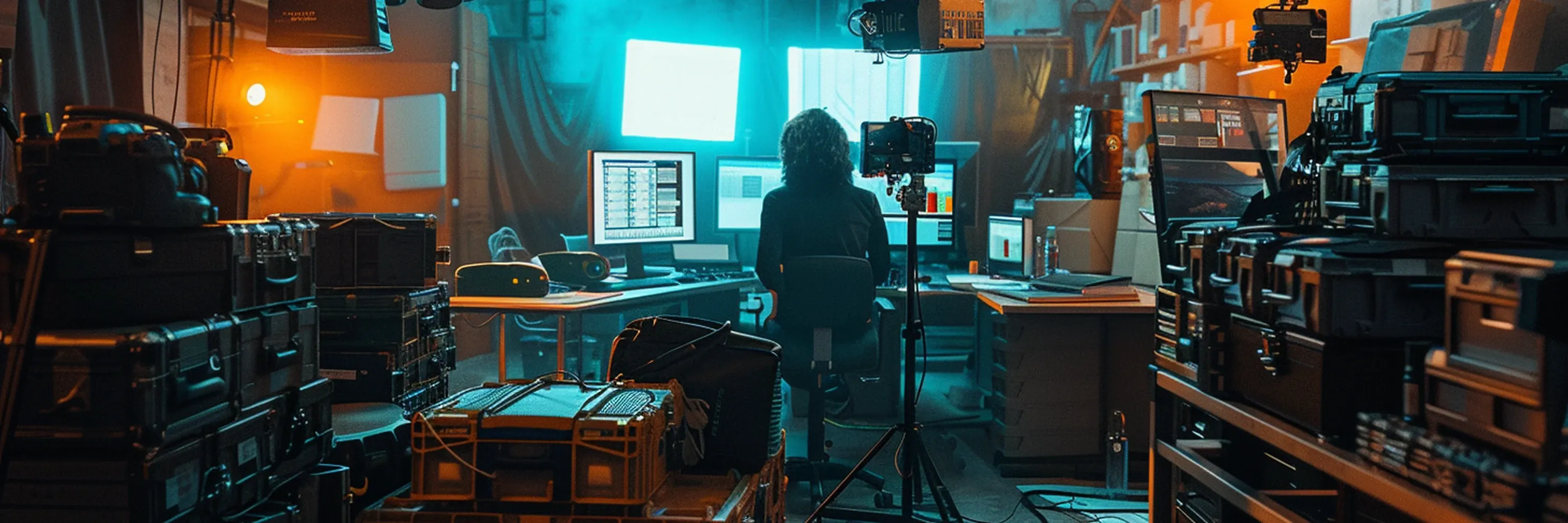
Media production workspace with professional video equipment, cameras, lighting gear, transport cases, and a technician operating multiple computer monitors in a broadcast and content creation environment.

Cinematography Services: What’s Included + Hiring Checklist

In this article, we explain the critical elements of professional video production and provide a step-by-step hiring checklist. We discuss how businesses navigate pricing structures and review scopes of work to ensure that their next investment delivers high-quality visual storytelling.

Content authorBy XTRNDPublished onReading time11 min read

Introduction

Professional cinematography services encompass the strategic planning, deliberate lighting, and expert camera operation that high-quality video production requires. Many businesses face confusion when they hire video professionals in a market that features vague vendor claims. Companies often struggle to distinguish between a standard camera operator and a partner who designs a complete visual strategy. Clients also face challenges when they compare quotes and do not understand what professional cinematography entails. According to VMG Studios, videographers document live events, and they do not manage controlled video shoots. In contrast, professional production teams establish structured workflows, design deliberate lighting, and lead entire crews to achieve a specific visual aesthetic.

XTRND operates as an expert in visual storytelling, manages complex production environments, and guides businesses through every phase of the creative process. XTRND structures comprehensive cinematography workflows to deliver high-quality videos for commercial projects. Organizations pay for these structured workflows and storytelling expertise to secure high-end visuals. A clear understanding of standard pricing structures and expected deliverables prevents common budgeting pitfalls and ensures the final video aligns with specific business goals.

This guide breaks down the core components of professional cinematography and provides practical frameworks to assess vendors confidently.

Craft Definition: Beyond Camera Operation

Businesses assess vendors confidently when they distinguish between basic camera operation and professional visual storytelling. A videographer typically arrives at an event and records what happens naturally. A Director of Photography designs the entire visual aesthetic before anyone turns on a camera. Companies often buy cinematography services because they want a visual strategy rather than just event documentation. Directors of Photography bring precision to a project, and they build confidence among stakeholders by planning every frame.

According to StudioBinder, Directors of Photography control lighting and framing along with lenses and camera movement to support the story's emotional tone. They do not just press the record button. They manage entire teams on set. The camera and grip departments and the electric department all answer to the cinematographer. This leadership role demands technical knowledge and creative vision. The production team must manipulate the environment intentionally when a brand wants to evoke specific emotions.

Professionals shape light to draw attention to specific subjects, and they select lenses that alter how audiences perceive physical space on screen. They also design camera movements that match the rhythm of the narrative. This deliberate approach separates high-end commercial work from casual video production. Companies that understand this distinction make better hiring decisions. They recognize that technical leadership costs more than simple camera operation. They evaluate portfolios for storytelling intent rather than just image sharpness. Experienced cinematographers orchestrate every visual element to serve the marketing message.

Scope of Work in Cinematography Services

Cinematographers orchestrate these visual elements through a rigorous workflow that begins long before the shoot date. The process requires certainty at every stage to avoid expensive mistakes on set. Experts establish this reliability through detailed discovery frameworks. They discuss target audiences, distribution channels, and visual references with brand representatives. This planning phase ensures that every visual decision supports the brand's objectives.

According to VMG Studios, cinematographers execute narrative projects where teams plan and storyboard every shot in pre-production. Directors of Photography translate marketing concepts into technical shot lists. They specify camera angles, lighting setups, and location requirements for every scene. This preparation allows crews to execute complex setups efficiently during production days. On set, cinematography involves deliberate control of light, composition, lens choice, and exposure to create mood. The Director of Photography directs the crew to shape the environment according to the established plan.

The work shifts to post-production once the crew finishes the shoot. The cinematographer often supervises the color grading process. They collaborate with colorists to refine the final image and ensure visual consistency across all deliverables. As experts at XTRND note, a specialized cinematic production house provides the administrative and creative infrastructure needed to support large-scale commercial shoots. This structured approach guarantees that the final product matches the initial creative vision.

Invoice Breakdown: Labor Versus Gear

Professional reviewing printed business documents beside a laptop in a modern office workspace, illustrating document management, compliance verification, digital workflows, and administrative processing.

Professionals apply this same structured approach to their pricing, and clients evaluate production quotes effectively when they understand these financial structures. Project managers often look for a reliable cinematography services template to compare vendor bids accurately. Standard invoices separate human expertise from equipment costs. This separation provides soundness to the budgeting process and offers financial security for both clients and contractors. Crew members rent specific gear based on the needs of each project because camera technology changes rapidly. According to DVXUser, professionals should bill owned gear separately from labor. This transparency prevents markups and clarifies what the client pays for.

Professionals typically divide their invoices into distinct categories:

  • Labor day rates: These fees compensate the crew for their time, expertise, and leadership on set. Assignment Desk reports that day rates range between $900 and $2,400 per day in 2026.

  • Gear rental fees: This section covers cameras, lenses, lighting units, and grip equipment. Crews charge for gear rentals even if they own the equipment because cameras suffer wear and tear during production.

  • Pre-production and post-production fees: Vendors bill for location scouting, storyboarding, and color grading sessions. These administrative phases take significant time away from other potential projects.

  • Consumables and hard expenses: Shoots require expendable items like tape, gel filters, hard drives, and meals. Production companies pass these direct costs to the client.

Brands evaluate these line items to ensure they fund strategy rather than just expensive tools. Modern AI tools for content creation help streamline administrative tasks, but they cannot replace the on-set physical execution that dictates labor costs.

Budget Constraints for Maximum Value

Companies scrutinize these labor costs heavily when economic pressures force them to rethink their commercial video budgets. Because budgets shrink, brands prioritize formats with a high return on investment. According to 90 Seconds, companies maintain quality when they focus on customer stories and testimonials during budget constraints. A cinematic production house brings precision to these formats and ensures the final product aligns with specific marketing goals. If brands invest in strong visual foundations early, they extract more value from their content over time.

XTRND serves as an expert in modern audiovisual production and effectively merges storytelling with AI-assisted workflows. The studio helps clients achieve maximum value when it blends traditional cinematography services with innovative technologies. For instance, AI filmmaking studios in MENA automate routine tasks, and this reduces overhead costs and preserves visual quality. This approach builds trust because clients see their resources allocated directly toward creative execution rather than administrative delays.

A 2024 report by 90 Seconds recommends that production teams adopt micro-content strategies with remote shoots to adapt to constrained budgets and maintain quality. A reliable cinematography services template helps outline these cost-saving measures clearly before production begins.

Teams usually implement the following strategies to maximize their spend:

  • Group multiple short videos into single shoot days.

  • Hire local crews to eliminate travel expenses.

  • Repurpose long-form footage into social media assets.

  • Use remote monitoring tools to reduce on-set personnel.

Ultimate Hiring Checklist for Production Partners

Companies implement these cost-saving strategies effectively only when they use a systematic evaluation process to secure the right video partner. Companies need confidence that their chosen vendor can execute complex visual strategies. A structured approach removes guesswork from the selection process. Companies evaluate potential partners through their pre-production planning, technical execution, and professional communication. This methodical vetting separates a genuine cinematic production house from amateur videographers.

This evaluation begins long before the first interview. Brands establish clear criteria for what constitutes professional cinematography services in their specific market. If clients define their visual goals upfront, they communicate their expectations more effectively to potential partners. Modern AI studio film production techniques complicate this process because many vendors claim advanced capabilities when they do not demonstrate real-world results. Companies need certainty when they invest significant marketing dollars into visual content.

Companies navigate this landscape when they follow a practical framework that tests vendors across multiple disciplines. This framework examines past work, verifies technical claims, and standardizes contract negotiations. These actionable steps help organizations ask the right questions, identify risks early in the discovery phase, and hire professionals who deliver measurable results.

Demo Reel Portfolios

Companies analyze a vendor's demo reel as the first actionable step to evaluate a production partner. Companies look beyond visually appealing images during this process. A strong portfolio demonstrates visual storytelling that matches the brand's creative needs. According to Adorama, cinematographers belong to larger teams and oversee the overall creative direction of the image. Companies ask vendors specifically what role they played in the examples they show.

If a reel shows high production value, organizations confirm whether the vendor actually lit the scene or simply operated a camera. Reliability comes from consistent execution across different environments. Clients look for portfolios that display varied lighting setups, deliberate camera movements, and cohesive color grading. This analysis proves that the vendor understands how to manipulate visuals to evoke specific emotional responses.

Production Vendor Claims

Clients verify the vendor's actual capabilities and operational claims after this portfolio analysis confirms their visual skills. Many freelancers market themselves as full-service agencies to secure larger budgets. Clients evaluate these claims and ask vendors to explain their pre-production workflow. Professionals happily discuss their process to create shot lists, lighting diagrams, and production schedules. They know that detailed planning prevents costly mistakes on shoot days.

A vendor that ignores pre-production does not understand the risks, and they introduce financial risks to the project. Companies require financial security when they book talent for commercial shoots. True professionals invest significant time into pre-production before the camera rolls. They also maintain strong relationships with specialized crew members like gaffers, grips, and sound mixers. Organizations assess these operational claims when they request references from past clients and ask about the specific crew structure that the vendor used on similar projects.

Contract Negotiations with Service Templates

Organizations formalize contracts as the final step in the selection process after they verify these operational claims. A standardized cinematography services template helps both parties establish transparent agreements from the start. This document outlines project deliverables, revision limits, and payment schedules. When clients use this detailed document, they prevent scope creep and avoid hidden fees later in the project.

Contract negotiations test the professionalism of the vendor. Professionals welcome clear boundaries and detailed statements of work because these documents provide legal soundness to the engagement. The contract explicitly defines ownership rights, delivery formats, and cancellation policies. If the vendor relies on vague emails instead of formal contracts, clients typically reconsider the partnership. Standardized documentation ensures everyone understands their responsibilities and protects the brand's investment throughout the entire production cycle.

XTRND: Cinematography Expertise for Modern Brands

XTRND operates as a specialist in cinematography and visual storytelling for commercial productions, brand campaigns, and digital content initiatives. The team combines creative direction with structured production workflows that cover pre-production planning, on-set execution, and post-production supervision. XTRND manages visual strategy through shot planning, lighting design, camera direction, and content adaptation to ensure that each production aligns with business objectives and audience expectations. By integrating traditional cinematography practices with modern production technologies and scalable workflows, XTRND helps organizations create consistent visual narratives that support long-term marketing and content goals.

Conclusion

A successful cinematography partnership protects this investment because it relies on transparent communication, clear scopes of work, and strategic alignment, rather than just expensive camera gear. Hiring experts who prioritize storytelling and pre-production planning ensures that every frame supports marketing goals. Professional cinematography services provide the structure and technical precision that businesses need to deliver high-quality results consistently. As video formats continue to grow in popularity, these services will dictate how companies communicate their stories in the future digital market. Saving the hiring checklist from this guide simplifies the next vetting process and helps evaluate potential vendors. XTRND provides expert video creation services, and exploring their agency video production workflow offers deeper insights into scaling visual content and improving a brand's narrative capabilities.

You should expect to receive the final video two to four weeks after the shoot ends. Editors need this time to sync audio, cut footage, and apply color correction. Complex projects with visual effects will extend this timeline by several weeks.

Most vendors charge an extra fee to release raw footage to clients. Production companies prefer to deliver polished videos because unedited clips don't represent their finished work. You must request the raw files during contract negotiations if you want to keep them for future use.

You should look for a crew that carries general liability and equipment insurance. General liability protects your business if someone gets hurt on your property during the shoot. Equipment policies cover damaged cameras and lighting gear so you don't have to pay for replacements.

Video professionals typically require half of the total budget upfront to secure the shoot dates. You pay the remaining balance after you approve the final video. Some agencies use a specialized billing platform like null to process these split payments and manage project invoices.

Standard contracts provide two rounds of editing revisions for the client. The first round lets you adjust the story structure and scene order. The second round focuses on minor tweaks to graphics and audio levels before the agency completes your cinematography services.

Schedule a Meeting

Book a time that works best for you

You Might Also Like

Discover more insights and articles

Title:
Motion Graphics Company: How to Choose the Right Partner

Meta description:
Choose a motion graphics company that fits your brand so you can read portfolios and set scope before you hire.

Arti

Motion Graphics Company: How to Choose the Right Partner

This article is a practical guide for anyone commissioning animated brand content for the first time. It explains what a motion graphics company actually produces, how a real production process works, and the concrete criteria you can use to evaluate and shortlist a partner with confidence.

Title:
Animation agency: how to choose the right studio + checklist

Meta description:
Before you hire an animation agency, use this checklist to write briefs and vet studios so you keep your project

Animation agency: how to choose the right studio + checklist

This article is a practical buyer's guide for the person who got handed the job of hiring an animation agency without ever running a creative purchase before. It walks you through scoping your needs, writing a brief that produces comparable proposals, vetting studios on signals you can actually judge, and standardizing your contracts. By the end, you'll have a reusable checklist you can run for this hire and every one after it.

Title:
Production services: what they are, types, and a workflow checklist

Meta description:
Before you buy production services, learn the workflow. This guide helps you hire the right team and keep

Production services: what they are, types, and a workflow checklist

This article explains what production services mean in the media and content world and how their main types map to a workflow from brief to final handoff. By the end, you'll know which type your project needs and how to brief a partner with confidence.

Title:
Film and Television Production Companies: What They Do & How

Meta description:
Find film and television production companies that fit your project. You will learn their workflow so you can

Film and Television Production Companies: What They Do & How

This article explains how production companies work across the screen industry, from early development to final delivery. It walks through the vocabulary and company types before offering a workflow for shortlisting partners without getting misled by glossy rankings.