Title:
Motion Graphics Company: How to Choose the Right Partner

Meta description:
Choose a motion graphics company that fits your brand so you can read portfolios and set scope before you hire.

Arti

Motion Graphics Company: How to Choose the Right Partner

This article is a practical guide for anyone commissioning animated brand content for the first time. It explains what a motion graphics company actually produces, how a real production process works, and the concrete criteria you can use to evaluate and shortlist a partner with confidence.

Content authorBy XTRNDPublished onReading time11 min read

Why choosing well matters

You have a budget and a deadline that won't move, with a brand you're responsible for protecting. What you don't have is experience hiring a motion graphics company, so every reel you watch looks impressive and none of them tell you whether the work will actually fit. That gap is where the worry lives. You can tell a video looks good, but you can't tell if the studio understands brand work or if you'll only discover the mismatch after the invoice arrives.

Those fears are reasonable. Animated content sits at the center of how companies communicate now, and 89% of businesses used video marketing in 2025 according to Wyzowl. When the work is off-brand or generic, you've spent real money weakening the visual identity you were trying to strengthen. A great reel proves a studio can make something pretty for someone. The real test is whether the studio can make the right thing for you. This article gives you a reliable way to tell the difference.

What a motion graphics company does

A motion graphics company designs animation built from a brand's visual identity. Think of static brand assets, like a logo, a type system, a color palette, and a set of icons, then think about what those look like when they move with purpose. That movement is the product. A specialized motion graphics design studio builds brand motion systems, animated typography, compositing work, explainers, product launch pieces, and content cut for social feeds.

This is design-led animation. The distinction matters because the global motion graphics market reached an estimated $110 billion in 2026, and plenty of vendors crowd into that space without the craft to back the claim. A real specialist extends your identity into time and motion so a three-second logo reveal feels like the same brand as your packaging.

When you watch a reel, here's what separates a specialist from a generalist:

  • A consistent motion language, where easing and transitions feel like deliberate choices repeated across pieces rather than random effects

  • Typographic precision, where text is kerned and timed so it stays readable and on-brand instead of sliding around for decoration

If you can see those two signals, you're looking at a studio that treats animation as design. If the reel is a grab-bag of trendy effects with no through-line, you're looking at someone who can imitate motion but can't build it from a brand.

Motion graphics vs animation agency

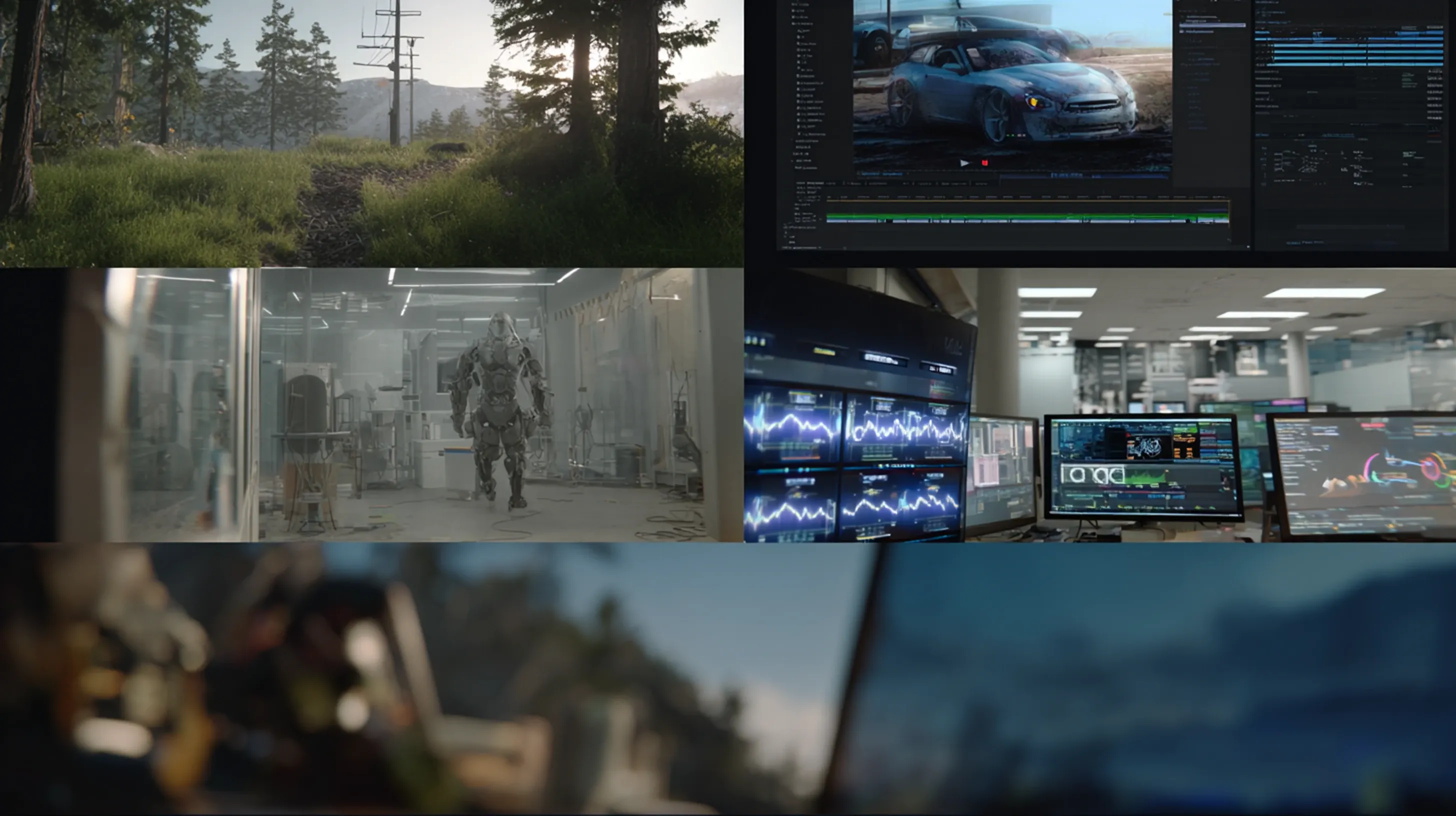
Multi-panel collage showcasing a cinematic visual effects and post-production workflow, featuring outdoor film footage, advanced video editing software, robotics concept development, analytics dashboards, and cinematic production scenes.

A broad animation agency and a focused motion graphics company solve different problems, and picking the wrong type wastes your budget before the project even starts. Animation agencies cover character animation and full 3D production. They're built for storytelling worlds with characters and environments. The global animation and VFX market was worth roughly $196 billion in 2024, and much of that is exactly this kind of cinematic work.

A motion graphics specialist concentrates on brand-driven graphic motion and design systems. The work is your typography moving, your data turning into animated charts, your product UI demonstrated cleanly, your logo resolving into a campaign. No invented characters, no narrative film. Just your identity, animated.

So how do you decide? Ask what your project is really for. If you need a branded explainer, a launch video, animated social content, or a motion system your team can reuse, you want a motion graphics company. If you need an animated mascot or a story-driven film with characters, you want an animation agency. Match the vendor to the goal, and neither type is better than the other in the abstract.

Inside the production process

A professional engagement follows a recognizable sequence, and knowing that sequence turns you from a nervous buyer into someone who can read a proposal critically. The motion graphics production process moves through clear milestones, each with something you should see or approve before the next begins. Use the stages below as a checklist when you review proposals and timelines. A vendor who skips steps or can't describe them is telling you something about how the work will go.

Discovery and brief

Every good project starts before anyone opens animation software. In the discovery stage, the studio learns your brand, your goals, your audience, and the single message the piece has to carry. A strong brief writes all of that down, along with the deliverables and the success measure you'll judge the work against.

What should you bring? Bring your brand guidelines, supported by existing assets and a handful of positive and negative motion references. A partner who rushes past this stage to get to the fun part is a red flag, because everything built later inherits the assumptions made here. The motion graphics production process depends on this foundation being solid.

Style frames and concept

Before committing to full animation, a motion graphics company establishes the visual direction through style frames and moodboards, then defines the motion language the piece will use. Style frames are static keyframes that show how the finished work will look at specific moments. They're the cheapest place to change your mind.

Approving direction here saves you from expensive revisions later, because reworking a moodboard takes hours while reworking finished animation takes days. Good style frames show more than a pretty picture. They demonstrate that the studio understood your brief and can hold your brand voice while bringing something to it. This is where a strong motion graphics design studio proves it can adapt rather than impose.

Production and compositing

Now the build happens. Animation brings typography and compositing together into the actual piece, delivered to you in review rounds rather than all at once. In the motion graphics production process, a typical engagement includes a first draft, then one or two rounds of revisions against written feedback.

If you've never sat through a revision cycle, here's the realistic expectation: you'll see rough work before polished work, and that's normal. The studio animates structure first, then refines timing and final detail. Most contracts specify how many review rounds are included, so consolidate your feedback into one clear list per round instead of dribbling notes in. The motion graphics production process runs on tight feedback loops, and scattered comments break them.

Delivery and final assets

The last stage is handoff. You should receive the final renders in the formats your channels need, which means the right resolutions and aspect ratios for a website and the social cut the brief called for, with the rest of the brief's required variations included in the handoff. A clean delivery is organized, labeled, and matched to where each file will actually live.

Before final payment, confirm that every deliverable on the brief is present and that ownership and usage rights are spelled out in writing. This should cover any source or brand-system files you were promised. You paid for this work, so you should know exactly what you can use, where, and for how long. A reputable motion graphics design studio settles this in the contract.

How to evaluate a motion graphics company

This is where you stop guessing and start assessing. Each lens below is a question a non-expert can confidently ask and answer, and together they form a checklist you can apply to any vendor. They pair directly with the production milestones above, because what a studio promises and what its process reveals should match.

Portfolio and craft

Look past the surface polish. Anyone can score a reel to a good track. What you're checking for is consistency: does the studio's work show a coherent motion language across different projects, or does each piece feel like a different team made it? Scan the typography in particular, because clean kerning and readable, well-timed text are hard to fake.

Template-driven output gives itself away. The transitions repeat, and the layouts feel familiar enough to belong to any brand. Tailored work feels built for one client. When you watch a reel, ask yourself whether you could swap one company's logo for another without anyone noticing. If the answer is yes, that's template work wearing a nicer outfit.

Fit with your brand

A studio with a strong house style can still be wrong for you if it can only make work that looks like its own brand. What you want is a motion graphics company that adapts to your visual identity instead of bending you toward theirs. Ask to see two or three projects for brands with distinctly different looks, then check whether the studio actually matched each voice.

This is the line between generic work and work that strengthens brand consistency. Animated content built from your guidelines reinforces every other touchpoint a customer sees. Content that ignores them creates a second, competing version of your brand. Given that explainer and animated formats can lift landing page conversions by up to 86% according to EyeView's research, the version that's actually on-brand is the one doing that work for you.

Process and communication

A transparent motion graphics design studio shows its reliability before you sign anything. It quotes a clear timeline and defines how many review rounds you get, with prompt, specific answers to your questions. Vague answers are a warning. Structured answers are a green flag.

Here are questions that reveal whether a motion graphics production process is real or improvised:

  • Can you walk me through your stages from kickoff to delivery, and what I approve at each one?

  • How many revision rounds are included, and what happens if I need more?

  • Who is my point of contact, and how fast do you usually respond during a project?

Check the answers against the milestones described earlier. A vendor whose process matches that shape is describing how it actually works. A vendor who improvises every answer is describing hope.

Pricing and scope

Motion graphics is scoped by the finished piece and priced against complexity and length. Industry rates for motion graphics commonly run between $2,000 and $5,000 per finished minute before complex 3D or character work, according to Beverly Boy Productions. Use that as a sanity check, not a rule, because scope drives the number more than length does.

When a bid comes in far below the rest, read it as a signal rather than a bargain. The cheapest quote means skipped discovery or revision rounds that reappear as change fees. Before you sign, ask plainly what is and isn't in the price: how many rounds, which formats, whether source files are included, and what a scope change costs. A studio that answers cleanly is one you can budget against. The motion graphics company that hides behind a vague lump sum is the one that surprises you later.

Working with a specialist like XTRND

The criteria above describe a certain kind of partner, and XTRND is built along those lines. It operates as a full-service production partner that, as the company describes its model, integrates generative media and visual effects compositing into a single pipeline under structured production management rather than handing your project between disconnected vendors. That consolidation reduces the handoff friction where off-brand results creep in.

Look at how that maps to your three fears. The worry about generic work is answered by craft-led brand motion. The worry about a chaotic engagement is answered by a defined motion graphics production process with milestones you approve. And the worry about hidden costs is answered by transparent communication about scope before the work starts. A motion graphics company that runs this way lets you verify its promises against its process, which is exactly what the evaluation lenses ask you to do. The standards in this guide are real, and a focused motion graphics design studio should meet them.

Making your final choice

You now have what you were missing at the start: a way to read a vendor that doesn't depend on how slick the reel is. Fit and craft, supported by a transparent process, tell you more than the flashiest sample or the lowest bid ever will. Watch for a coherent motion language, proof the studio can hold a brand voice that isn't its own, a process that matches the milestones you've read about, and pricing you can actually compare.

The decision is no longer a guess. You know what to look for and which questions to ask, with a clear sense of what good craft and a clean handoff look like. When you're ready to test these criteria against real work, the simplest next step is to ask a motion graphics company for a portfolio review and a walk-through of its process. Start that conversation with XTRND and bring this checklist; let the answers do the deciding.

A brand motion project usually takes 3 to 8 weeks from kickoff to final delivery. The schedule depends on script length, design complexity, review speed, and the number of cutdowns. Build time for discovery, style approval, animation reviews, and final exports before launch.

Give the studio your brand guidelines, logo source files, fonts, color values, product screenshots, and channel requirements. Include past videos or references that show what fits and what doesn’t. This helps the team design motion that matches your existing identity from the first concept.

Yes, you can reuse motion graphics if versioning is included in the scope. Ask for horizontal, square, and vertical exports based on where the content will appear. For social use, confirm text-safe areas, caption needs, and whether the piece works without sound.

Ask for source files if your team needs to update text, swap visuals, or build future pieces from the same motion system. The contract should name the exact files included, such as After Effects projects and packaged assets. It should also cover font and music licensing.

Contact XTRND when you need a motion graphics company for brand-led animation, visual effects compositing, or generative media within a managed production process. Share your brief, deadline, usage needs, and brand materials. Then ask for a portfolio review and process walk-through before approving scope.

Schedule a Meeting

Book a time that works best for you

You Might Also Like

Discover more insights and articles

Title:
Animation agency: how to choose the right studio + checklist

Meta description:
Before you hire an animation agency, use this checklist to write briefs and vet studios so you keep your project

Animation agency: how to choose the right studio + checklist

This article is a practical buyer's guide for the person who got handed the job of hiring an animation agency without ever running a creative purchase before. It walks you through scoping your needs, writing a brief that produces comparable proposals, vetting studios on signals you can actually judge, and standardizing your contracts. By the end, you'll have a reusable checklist you can run for this hire and every one after it.

Title:
Production services: what they are, types, and a workflow checklist

Meta description:
Before you buy production services, learn the workflow. This guide helps you hire the right team and keep

Production services: what they are, types, and a workflow checklist

This article explains what production services mean in the media and content world and how their main types map to a workflow from brief to final handoff. By the end, you'll know which type your project needs and how to brief a partner with confidence.

Title:
Film and Television Production Companies: What They Do & How

Meta description:
Find film and television production companies that fit your project. You will learn their workflow so you can

Film and Television Production Companies: What They Do & How

This article explains how production companies work across the screen industry, from early development to final delivery. It walks through the vocabulary and company types before offering a workflow for shortlisting partners without getting misled by glossy rankings.

Title:
Filming Production Companies: How to Choose the Right Partner

Meta description:
Before you hire filming production companies, read this guide to review vendor bids and vet creative reels so yo

Filming Production Companies: How to Choose the Right Partner

This article is a practical guide for anyone who needs to hire a production partner for commercial video work, from brand films to documentaries. It walks through what filming production companies actually do, the criteria that separate strong vendors from weak ones, and a checklist you can run from brief to signed contract.