Extreme close-up of a human eye with cybernetic facial enhancements, glowing circuitry, and futuristic biomechanical details

TV Production Agency: Services, Workflow, and How to Choose

In this article, we examine the internal operations of top-tier broadcast partners to understand what drives their success beyond creative portfolios. We explore standard procedures, the impact of current macroeconomic conditions, and how new technologies shape modern deliverables.

Content authorBy XTRNDPublished onReading time11 min read

Introduction

Television production coordinates vast logistical networks and creative teams to deliver high-quality broadcasts on tight schedules. Chaotic project management, blown budgets, and poor communication turn many stunning video projects into absolute nightmares behind the scenes. Creative portfolios demonstrate artistic vision, but a successful television project relies entirely on rigorous internal operations and structured frameworks. Today, a capable TV production agency manages complex logistics, coordinates multi-location shoots, and ensures final broadcast compliance through deep organizational discipline. Without these processes, timelines stretch, and budgets spiral out of control. Data shows that 48% of clients end agency partnerships because of dissatisfaction with delivery. This statistic underscores the importance of operational reliability over mere creative talent.

Stakeholders evaluate potential partners effectively when they understand how top-tier firms operate. This guide explains these internal operations and shows how to select a partner that delivers creative excellence and operational stability.

Standard Studio and Full Agency Differences

Stakeholders look for operational stability, and the difference between a basic studio and a full-scale partner defines the success of complex broadcasts. A standard visual storytelling studio focuses heavily on camera work, lighting, and creative direction. These creative shops produce beautiful images and compelling narratives. However, they lack the operational infrastructure to manage large-scale broadcast requirements. They struggle when projects require multi-location logistics, complex legal clearances, and union talent management.

In contrast, a fully equipped partner builds a definitive operational framework around the creative process. These firms maintain dedicated legal departments, risk management protocols, and full budget tracking systems. They handle location permits, negotiate union contracts, and ensure compliance with municipal regulations. This operational depth protects the project from costly delays and legal liabilities. Better project management helps teams execute creative concepts successfully. A strong project management team anticipates logistical hurdles before they disrupt the shooting schedule.

Evaluating agency video production engagements requires looking past the showreel. Stakeholders need to examine how the firm handles unexpected weather delays or equipment failures. If a firm operates without structured risk management, then the project assumes unnecessary financial exposure. The best partners merge creative vision with strict operational discipline. This combination ensures the final product meets artistic expectations while respecting the original budget constraints. They turn chaotic artistic concepts into deliverable assets on time.

TV Production Agency Process

Professional firms turn artistic concepts into deliverable assets when they follow steady phases to move a project from the initial pitch to the final delivery. A capable TV production agency relies on a structured timeline to prevent budget overruns and schedule conflicts. This rigorous approach replaces chaos with predictable milestones. Teams know exactly what tasks they must complete before moving to the next stage.

A reliable workflow involves specific steps that guide the entire production lifecycle:

  1. Define the creative concept and assess project feasibility.

  2. Secure resource approvals and finalize the working budget.

  3. Coordinate daily on-set operations and manage talent schedules.

  4. Edit raw footage and apply necessary visual effects.

  5. Conduct quality control and verify broadcast compliance.

These distinct phases build upon each other. When teams complete one phase correctly, they prevent errors from compounding later in the project. The entire organization works in unison to maintain momentum and protect the financial investment. A predictable process allows producers to adjust resources without halting the progression of the project. A well-organized tv production agency uses these milestones to keep stakeholders informed throughout the journey. Because each phase requires specific approvals, the client retains control over the creative direction and financial expenditures.

TV Production Agency Workflow Initiation

The client retains control during the early stages of the project, and these early stages establish the foundation for all subsequent work. During this phase, producers evaluate creative pitches and conduct detailed feasibility assessments. They calculate preliminary costs, review location options, and determine equipment needs. This deliberate planning prevents teams from committing resources to unworkable concepts. If a visual storytelling studio skips these assessments, the project often faces sudden financial shortages during filming. Producers keep the project solvent when they secure formal resource approvals before spending major budgets. Stakeholders review the proposed timeline and authorize the initial expenditures. This preparation gives the crew a clear mandate and realistic boundaries for the upcoming shoot. Proper initiation ensures that creative ambition aligns perfectly with logistical reality.

Active Production and Execution Management

After proper initiation aligns creative ambition with logistical reality, filming begins, and the focus shifts to concrete execution and daily coordination. Directors manage the talent while production managers track the daily schedule. Every hour on set costs thousands of dollars, and delays quickly threaten the budget. The tv production agency workflow requires rigid adherence to call sheets and shot lists.

XTRND operates as a production company that coordinates on-set execution for complex broadcasts. The experts at XTRND implement strict management protocols that keep large crews synchronized across multiple locations. They demonstrate how proactive problem-solving keeps a creative team on schedule despite sudden weather changes or equipment issues. Efficient talent management and precise resource allocation ensure the project remains solvent and aligned with the core process.

Post-Production and Broadcast Delivery

Once the crew completes the core filming process, the final phase transforms raw footage into a polished broadcast asset. Editors cut the scenes together while technical artists add visual effects and sound design. A professional tv production agency implements precise quality control measures during this stage. Colorists balance the picture, and audio engineers mix the dialogue to meet specific loudness standards. The team must verify that the final video passes strict Federal Communications Commission compliance checks. Networks reject files that fail these mandatory technical specifications. Editors and engineers must pass these final gates with careful attention to technical details and an understanding of modern broadcast standards. A successful handoff completes the entire workflow and delivers a pristine product to the broadcasting network on time.

Macroeconomic Pressures on Timelines

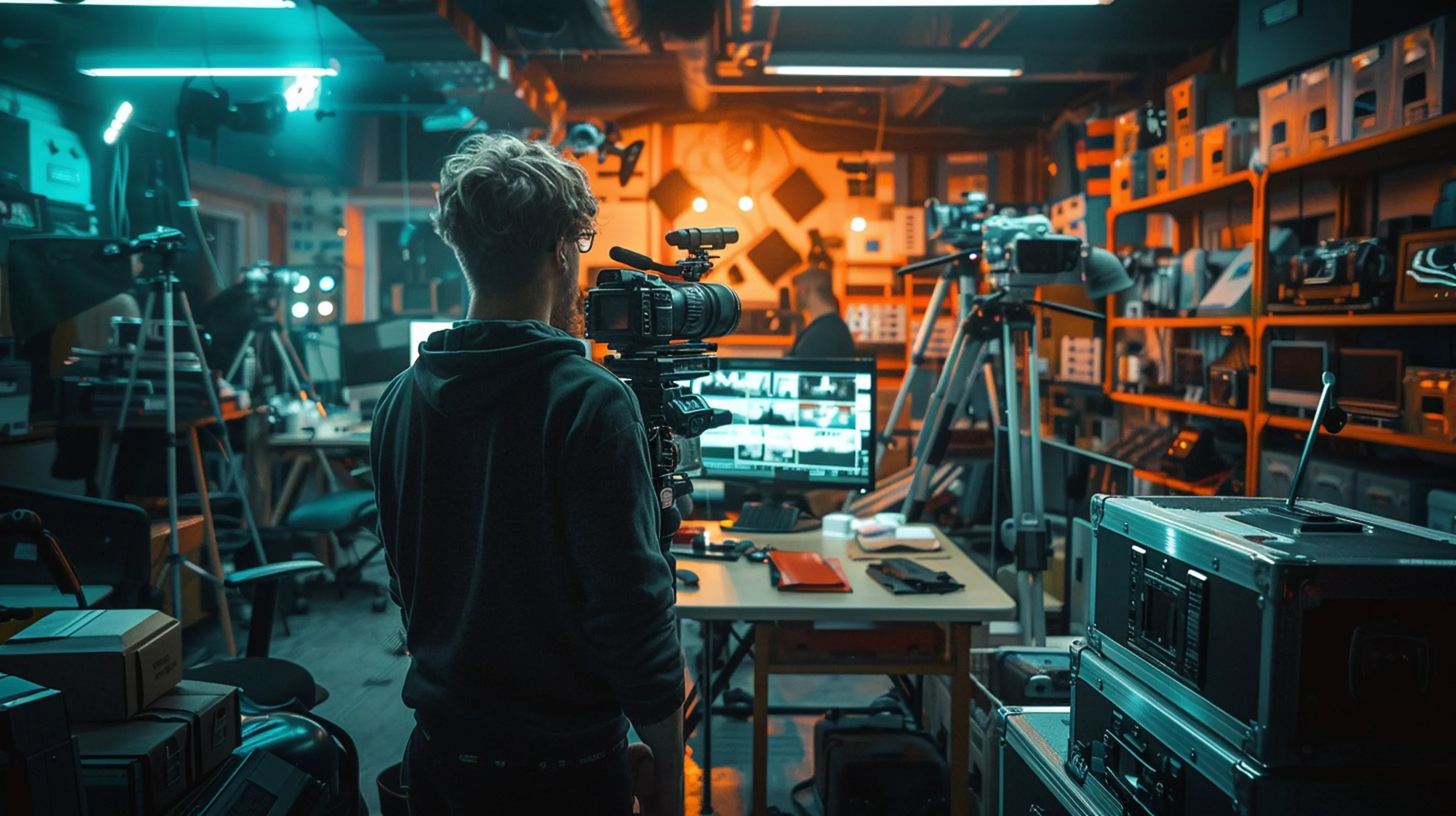
Videographer operating professional camera equipment inside a modern video production studio filled with editing monitors, lighting, and broadcast gear

Agencies deliver pristine products on time through careful planning because modern economic realities dictate how firms plan budgets and schedule shoots. Inflation and global supply chain disruptions force producers to adopt pragmatic strategies. A basic studio often struggles to absorb sudden price spikes for materials and equipment rentals. The industry faced severe challenges recently, as data shows that global production output declined 20 to 40 percent in 2024. This contraction squeezed available resources and altered standard production timelines across the entire sector.

Because production costs are rising globally for set construction, travel, freight, materials, insurance, and labor, producers must secure funding much earlier in the process. Planners need to build larger contingency funds to protect the project from sudden economic shifts. Furthermore, tariffs sparked supply chain disruptions in 2025 that required businesses to redesign their sourcing networks entirely. Firms now have to source specialized cameras, lighting rigs, and unique set props months in advance. When firms secure these materials late, they face massive premium charges that destroy the working budget.

These financial pressures make realistic timeline forecasting a mandatory skill for any reliable partner. If a firm ignores these macroeconomic factors, they risk halting production midway through filming because of budget exhaustion. Experienced partners continuously monitor global shipping rates and local labor markets. They adjust their operational frameworks to navigate these financial hurdles without delays. A well-prepared agency protects the client's investment and guarantees delivery despite difficult economic conditions.

Output Acceleration With AI Remote Systems

A well-prepared agency guarantees delivery with modern tools, and technology changes how production teams coordinate across different time zones. Remote collaboration software helps modern teams review daily footage instantly. This setup allows directors in Los Angeles to approve scenes shot in London, and they do not wait for overnight file transfers. Remote systems reduce travel expenses and improve the entire production workflow. Agencies use these digital systems to maintain momentum and prevent scheduling conflicts.

Alongside remote systems, automation software accelerates the post-production phase. Industry data shows that 67% of video production companies adopted Artificial Intelligence tools by the end of 2023. Editors use AI tools for content creation to automate audio syncing, color matching, and transcription. These software tools remove tedious manual tasks so the creative team can focus on storytelling. For example, when a global brand needs multiple language variations for a commercial, software translates and adjusts lip-syncs in hours instead of days. Because of this efficiency, 89% of video production workflows saw a 40% time reduction after studios implemented automation software.

XTRND operates as a visual storytelling studio and implements these digital workflows. Their experts build proprietary production systems that integrate remote camera monitoring with cloud-based editing networks. They demonstrate how automated solutions reduce overhead costs and accelerate project delivery for complex global campaigns. These digital frameworks protect the client's budget and deliver pristine assets on schedule.

Actionable Steps To Choose Right Partner

Digital frameworks help deliver pristine assets on schedule, but a beautiful portfolio does not guarantee a successful project. Stakeholders must evaluate the operational infrastructure that supports the creative work before they hire a TV production agency. Current market data reveals a disconnect between what firms offer and what clients actually need. Recent surveys show that 40% of clients surveyed plan to switch agency partners in the next six months. This turnover happens because agencies and clients disagree about the importance of delivery and strategic approach.

A secure investment requires stakeholders to look past the highlight reel and examine the internal systems. If a firm operates without structured studio workflows, the project faces immediate logistical risks. Stakeholders feel assured when they systematically assess the firm's administrative capabilities.

They typically evaluate a potential TV production agency workflow by examining these elements:

  • Detailed examples of budget tracking documents and expense reporting intervals.

  • Quality assurance protocols for final broadcast compliance and technical specifications.

  • Risk management plans for weather delays or equipment failures.

  • Clear breakdowns of pricing transparency about markups on equipment rentals and crew day rates.

This evaluation process eliminates unreliable vendors early in the pitching phase. A firm that provides these operational details demonstrates the discipline necessary to manage complex television broadcasts.

Communication Protocols For Trust Maintenance

These operational details and operational frameworks keep projects on schedule, but transparent communication sustains the actual business partnership. A professional TV production agency establishes clear reporting protocols from the first meeting. Without standardized communication channels, stakeholders lose visibility into daily progress and financial expenditures. This lack of transparency quickly breeds suspicion and damages the working relationship.

Industry experts emphasize that technical failures rarely cause partnerships to collapse. Instead, experts cite poor communication and distrust as the main reasons that agency-client relationships break down. Producers who fail to communicate minor schedule changes or slight budget adjustments create problems for the corporate stakeholders. A solid partnership requires scheduled weekly status meetings and daily wrap reports during production.

These protocols keep the creative team and the financial sponsors aligned throughout the entire production lifecycle. For example, if the city revokes a location permit, immediate disclosure allows stakeholders to review and approve alternate sites without panic. Trust develops naturally when an agency proactively shares both successes and setbacks and does not hide mistakes until the final invoice. A firm that prioritizes relationship management changes a single transactional project into a long-term, reliable collaboration. These communication frameworks ensure the final broadcast meets expectations and preserve the professional relationship for future campaigns.

XTRND’s Approach to Modern TV Production

XTRND combines operational production management, AI-assisted workflows, and remote collaboration systems to support complex television and branded media projects. Instead of relying only on traditional production pipelines, XTRND integrates cloud-based editing, automated post-production processes, and scalable coordination frameworks that help creative teams manage multi-location shoots more efficiently.

This approach allows productions to reduce delays, streamline communication between distributed teams, and accelerate final delivery timelines without compromising broadcast quality. By combining structured operational systems with modern production technology, XTRND helps brands and broadcasters execute large-scale campaigns with greater flexibility, transparency, and production reliability.

Conclusion

To summarize these major points, strong communication frameworks preserve relationships, and an operational framework secures a successful broadcast. Strict operational discipline and clear communication protocols produce a high-quality broadcast. A reliable TV production agency aligns every detail with budget and timeline expectations. A successful project requires a thorough review of the agency's project management capabilities and creative vision. The experts at XTRND build strong operations that provide the foundation for consistent repeatable production systems and protect future investments. Evaluate the operational infrastructure before the next pitch process and partner with an agency that prioritizes execution alongside creativity.

You should allocate between ten and twenty percent of your total budget for contingencies. This financial buffer protects your project when bad weather delays filming or equipment breaks down. If you don't keep these funds reserved, you risk compromising on quality when costs rise.

Producers submit municipal permit applications at least three to four weeks before the scheduled shoot. They can't wait until the last minute because complex locations that require street closures take longer to process. You need to secure these approvals to help your crew avoid legal penalties.

Editors rely on frame-accurate video review platforms like Frame.io or Wipster to share daily footage. These cloud tools allow directors to leave specific time-coded comments directly on the video player. The post-production team fixes mistakes faster because they don't have to send large files.

You shouldn't sign the final contract with your tv production agency until they provide a complete budget breakdown and timeline. This document must detail all crew day rates, equipment rental costs, and insurance liabilities. Signing this agreement protects both parties from billing surprises.

Artificial intelligence can't replace a human engineer for final broadcast compliance checks. Networks enforce specific rules about audio loudness and color safe zones that require human judgment to verify. The experts at XTRND use software to assist the process, but professionals always perform the final technical approval.

Schedule a Meeting

Book a time that works best for you

You Might Also Like

Discover more insights and articles

Title:
Motion Graphics Company: How to Choose the Right Partner

Meta description:
Choose a motion graphics company that fits your brand so you can read portfolios and set scope before you hire.

Arti

Motion Graphics Company: How to Choose the Right Partner

This article is a practical guide for anyone commissioning animated brand content for the first time. It explains what a motion graphics company actually produces, how a real production process works, and the concrete criteria you can use to evaluate and shortlist a partner with confidence.

Title:
Animation agency: how to choose the right studio + checklist

Meta description:
Before you hire an animation agency, use this checklist to write briefs and vet studios so you keep your project

Animation agency: how to choose the right studio + checklist

This article is a practical buyer's guide for the person who got handed the job of hiring an animation agency without ever running a creative purchase before. It walks you through scoping your needs, writing a brief that produces comparable proposals, vetting studios on signals you can actually judge, and standardizing your contracts. By the end, you'll have a reusable checklist you can run for this hire and every one after it.

Title:
Production services: what they are, types, and a workflow checklist

Meta description:
Before you buy production services, learn the workflow. This guide helps you hire the right team and keep

Production services: what they are, types, and a workflow checklist

This article explains what production services mean in the media and content world and how their main types map to a workflow from brief to final handoff. By the end, you'll know which type your project needs and how to brief a partner with confidence.

Title:
Film and Television Production Companies: What They Do & How

Meta description:
Find film and television production companies that fit your project. You will learn their workflow so you can

Film and Television Production Companies: What They Do & How

This article explains how production companies work across the screen industry, from early development to final delivery. It walks through the vocabulary and company types before offering a workflow for shortlisting partners without getting misled by glossy rankings.